


Assessing the role of adolescent hormonal contraceptive use on risk for depression: a 3-year longitudinal study protocol - BMC Women's Health
Source : https://bmcwomenshealth.biomedcentral.com/articles/10.1186/s12905-022-01623-2
Background The incidence of depression in human females rises steadily throughout adolescence, a critical period of pubertal maturation marked by increasing levels of gonadal hormones including estrogens and progesterone. These...
Conclusion/Relevance: In this study we will assess the effect of CHC use during adolescence on development of Major Depressive Disorder (MDD). We will control for variables previously found to or proposed to partially account for the observed relationship between CHC use and MDD, including socioeconomic status, age of sexual debut, and...
-
Birth Control Spotlight4yrKey Points: • Source: BMC Women’s Health • Conclusion/Relevance: “In this study, we examine whether and how introducing synthetic estrogen and progestin derivatives through the use of combined hormonal contraceptives (CHC), affects adolescent females’ Show More
Availability of informal social support and the impact on health services utilization among women in community corrections who engage in substance use and risky sexual behavior: New York City, 2009-2012 - Health & Justice
Source : https://healthandjusticejournal.biomedcentral.com/articles/10.1186/s40352-022-00170-0
Background Women under community supervision in the U.S. experience high rates of substance use and HIV/STDs and face multiple barriers to healthcare services. Informal social support, provided by family, friends,...
Conclusions: Engagement of sexually-active and drug- and justice-involved women in health services should address the availability and strengthening of informal social support, particularly ensuring individuals’ informal networks allow for discussions on the harms of risky sexual and drug use behaviors.

Factors related to delays in obtaining contraception among pregnancy-capable adults in New York state during the COVID-19 pandemic: The CAP study - PubMed
Source : https://pubmed.ncbi.nlm.nih.gov/35158169/
doi: 10.1016/j.srhc.2022.100697. Online ahead of print. 1 City University of New York (CUNY) Graduate School of Public Health and Health Policy, Department of Community Health and Social Sciences, New York,...
Conclusions: Reducing financial barriers that help individuals maintain their housing and living necessities, and promoting telemedicine visits, may help increase access to contraception.
Association Between Hormonal Birth Control, Substance Use, and Depression
Source : https://www.frontiersin.org/articles/10.3389/fpsyt.2022.772412/full
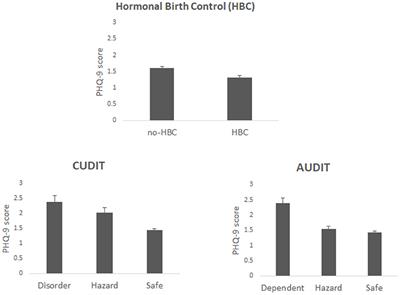
ObjectiveThe current study examined the impact of the use of hormonal birth control, cannabis (CB), and alcohol on depression symptoms.Study DesignSurvey data from 3,320 college-aged women collected over a 2-year...
Conclusions: While there are some limitations (e.g., the between subjects design makes it such that there may be uncontrolled differences between groups), the results suggest that hormonal birth control use may help to reduce depressive symptoms.

Financial Instability and Delays in Access to Sexual and Reproductive Health Care Due to COVID-19 - PubMed
Source : https://pubmed.ncbi.nlm.nih.gov/35180352/
Objective: To identify prevalence of, and patient and clinic characteristics associated with, delays in access to sexual and reproductive health (SRH) care due to the COVID-19 pandemic across three states...
Conclusions: Access to contraception was curtailed during the COVID-19 pandemic, especially for those who experienced employment and financial instability. Individuals' and clinics' ability to mitigate these effects were likely dependent on state context and response to the pandemic, among other factors.