



Long-term evaluation of uterine fibroid embolisation using MRI perfusion parameters and patient questionnaires: preliminary results - BMC Medical Imaging
Source : https://bmcmedimaging.biomedcentral.com/articles/10.1186/s12880-022-00926-y
Background Uterine fibroid embolisation (UFE) is an established treatment method for symptomatic uterine myomas. This study evaluates the efficacy of UFE using objective magnetic resonance imaging (MRI) data for size...
Conclusion: This study shows that uterine fibroid embolisation induces a significant long-term decrease in myoma size and perfusion while healthy uterine tissue remains unaffected. Fibroid-related symptoms are reduced for the sake of improved quality of life.
Treatment Patterns in Patients with Uterine Fibroids With and Without a Diagnosis of Heavy Menstrual Bleeding: Results from a Large U.S. Claims Database
Source : https://www.liebertpub.com/doi/full/10.1089/jwh.2022.0056
If the address matches an existing account you will receive an email with instructions to reset your password.
Conclusion: In this analysis, in the year following incident diagnosis, U.S. patients aged ≤50 years with UF and a history of HMB were more likely to receive UF treatment, either surgical or pharmacologic, than women without claims for HMB. Apart from HMB, pain was the most commonly documented symptom of UF. These findings highlight the need...
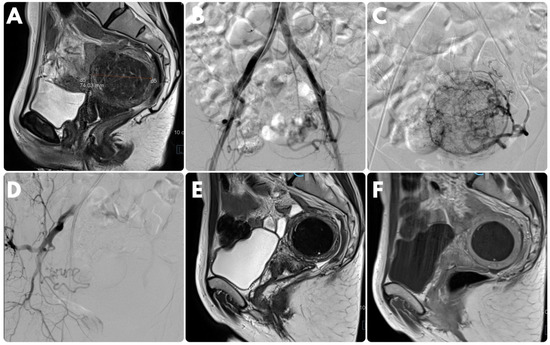
Unilateral Uterine Artery Embolization as a Treatment for Patients with Symptomatic Fibroids-Experience in a Case Series
Source : https://www.mdpi.com/1648-9144/58/12/1732
Background and Objectives: Uterine artery embolization (UAE) has become an accepted and widely performed therapy for patients with symptomatic (reporting at least two of the following symptoms: severe or prolonged...
Conclusion: The results of our study support the statement made by previous authors that unilateral uterine artery embolization might be performed electively in patients with unilateral fibroid disease, as it is associated with a high rate of clinical success, overall patient satisfaction and acceptable rate of re-interventions.

Multidisciplinary view on uterine junctional zone in uteri affected by adenomyosis: explaining discrepancies between MRI and transvaginal ultrasound images on a microscopic level - PubMed
Source : https://pubmed.ncbi.nlm.nih.gov/36370446/
The uterine junctional zone is the subendometrial area in the myometrium that contributes to peristalsis and aids in spermatozoa and blastocyst transport. Alterations in appearance of the junctional zone on...
Discussion: Our review suggests that the junctional zone is distinguished from the middle and outer myometrium by gradual changes in smooth muscle cell density, extracellular space, connective tissue, water content, and vascular properties. Clinicians should be aware that findings on MRI cannot readily be extrapolated to ultrasound.
Preoperative Hematocrit Level and Associated Risk of Transfusion Based on Fibroid Burden and Surgical Route
Source : https://www.sciencedirect.com/science/article/pii/S1553465022009724
To determine the association between preoperative hematocrit and risk of blood transfusion for laparotomic and laparoscopic myomectomy based on fibroid burden and surgical route. A cohort study of prospectively collected...
Conclusion: Incremental increases in hematocrit result in a significantly decreased risk of blood transfusion at the time of myomectomy.