


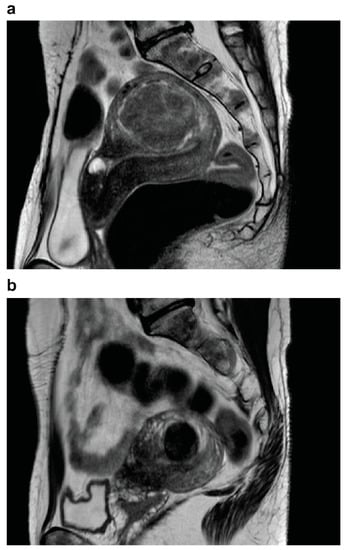
Myoma with Hypermenorrhea Treated with Ultrasound-Guided Microwave Ablation of the Inflowing Blood Vessels to the Uterine Myoma: A Case
Source : https://www.mdpi.com/2673-396X/3/4/54/htm
Microwave endometrial ablation (MEA) is a minimally invasive treatment for uterine myoma with hypermenorrhea, which can replace conventional hysterectomy. However, cases requiring additional treatment because of postoperative recurrence are often...
Discussion: Microwave ablation of the inflowing blood vessels to the uterine myoma under transvaginal ultrasound guidance showed efficacy and safety, which was comparable to those exhibited by conventional MEA. Furthermore, this method also reduced the myoma size. These findings suggest that this method is a novel treatment option for patients...

Comparison of the effect of general anesthesia and spinal anesthesia technique combined with general anesthesia on intraabdominal volume during gynecological laparoscopy - PubMed
Source : https://pubmed.ncbi.nlm.nih.gov/36148979/
doi: 10.1111/jog.15435. Online ahead of print. 1 Department of Obstetrics and Gynecology, Adıyaman University Faculty of Medicine, Adiyaman, Turkey. 2 Department of Obstetrics and Gynecology, Kanuni Training and Research Hospital,...
Conclusion: We found that spinal anesthesia combined with GA had no effect on the abdominal volume and anthropometric measurements in laparoscopic procedures.

A critical review of "uterine leiomyoma" with subsequent recurrence or metastasis: A multicenter study of 62 cases - PubMed
Source : https://pubmed.ncbi.nlm.nih.gov/36114691/
doi: 10.1111/jog.15426. Online ahead of print. 1 Department of Pathology, Kurume University School of Medicine, Fukuoka, Japan. 2 Department of Obstetrics and Gynecology, Kurume University, Fukuoka, Japan. 3 Department of...
Conclusion: The recurrence or metastasis in cases of “leiomyoma” is attributed to iatrogenic or under-evaluation of primary tumors, although a subset of cases is a rare example of biological progression.

Laparoscopic surgeries for uterine fibroids and ovarian cysts reduce ovarian reserve via age- and surgical type-manner - PubMed
Source : https://pubmed.ncbi.nlm.nih.gov/36198327/
Aim: Diminished ovarian reserve can be characterized by poor response to ovulation and low number of eggs. The risk factors include endometriosis, receiving cancer treatment, luteal phase deficiency and gynecologic...
Conclusion: All four laparoscopic surgeries impair ovarian function in one month after surgery. Adnexectomy is an independent factor of reduced ovarian reserve in 1 month after surgery. It is necessary to make a prudent decision when selecting surgical treatment for perimenopausal women with uterine fibroids or ovarian cysts.

Gross Hematuria Caused by a Intravesical Migration of IUD | RRU
Intrauterine device (IUD) is the second most widely used method of contraception worldwide. Up to 14% women prefer IUD for its attractive advantages such as cost effectiveness, high efficiency, low...
Conclusion: A vesical foreign body can be a cause of gross hematuria and recurrent UTI. A urologist should have a high index of suspicion during evaluation of hematuria in women of reproductive age.