



Prevention of uterine fibroids: Molecular mechanisms and potential clinical application
Source : https://www.sciencedirect.com/science/article/pii/S2949838423000063
Professor Ayman Al-Hendy is a practicing Gynecologist-Scientist, His research utilizes human (clinical trials), human tissues as well as preclinical animal models to understand the origin and molecular pathogenesis of uterine...
Conclusion: No long-term noninvasive treatment option currently exists for UFs, and deeper mechanistic insights into tumor etiology will be key to developing newer therapies for treatment or preferably prevention of UF. Hence, we propose using SWE as a screening tool with subsequent prevention strategies for women at risk of UF development.
Laparoscopic myomectomy - The importance of surgical techniques
Source : https://www.frontiersin.org/articles/10.3389/fmed.2023.1158264/full
Laparoscopy is a routine procedure for benign gynecological tumors. Although the laparoscopic approach for myomas is a common procedure, it can be challenging. To improve outcomes, research regarding port access,...
Conclusion: Laparoscopic myomectomy can be a valuable strategy for patients who desire fertility preservation. With advantages such as minimal postoperative pain, rapid recovery, esthetic outcomes, and good reproductive outcomes, the laparoscopic approach is considered the leading surgical approach in this field.

Prescription Opioid Use for Acute Pain and Persistent Opioid Use After Gynecologic Surgery: A Systematic Review. | Read by QxMD
Kristen A Matteson, Megan O Schimpf, Peter C Jeppson, Jennifer C Thompson, Rajiv B Gala, Sunil Balgobin, Ankita Gupta, Deslyn Hobson, Cedric Olivera, Ruchira Singh, Amanda B White, Ethan M...
Conclusion: On average, patients use the equivalent of 15 or fewer 5-mg oxycodone tablets (or equivalent) in the 2 weeks after discharge after major gynecologic surgery for benign indications. Persistent opioid use occurred in 4.4% of patients who underwent gynecologic surgery for benign indications. Our findings could help surgeons minimize...
"I think people should be more aware:" Uterine fibroid experiences among women living in Indiana, USA
Source : https://www.sciencedirect.com/science/article/abs/pii/S0738399122008679
To understand healthcare experiences among patients with uterine fibroids (fibroids) across the continuum of care, from early symptoms through diagnosis, treatment, and management, while also investigating health disparities. We conducted...
Conclusion: Results highlight barriers and facilitators to fibroids-related decisions, behaviors, and outcomes. Translation of research to practice was guided by a combined Social-Ecological Model and social determinants of health framework for development of strategic interventions.
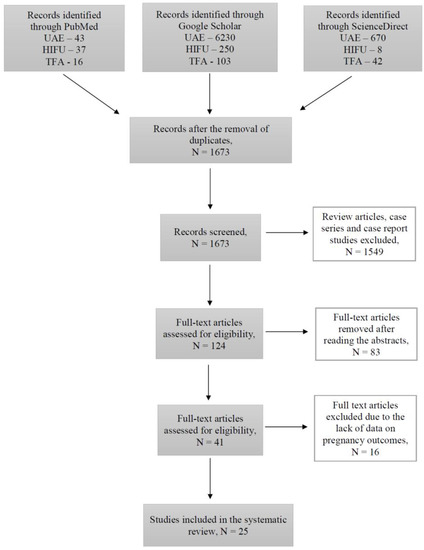
Reproductive and Obstetric Outcomes after UAE, HIFU, and TFA of Uterine Fibroids: Systematic Review and Meta-Analysis
Source : https://www.mdpi.com/1660-4601/20/5/4480
Novel treatment options for uterine fibroids, such as uterine artery embolization (UAE), ultrasound-guided and magnetic resonance-guided high-intensity focused ultrasound (USgHIFU and MRgHIFU), and transcervical radiofrequency ablation (TFA) methods, are widely...
Conclusion: The available evidence confirmed that minimally invasive uterine-sparing treatment options for uterine fibroids, such as UAE, HIFU, and TFA, are a good approach for patients wishing to preserve their fertility, with overlapping reproductive and obstetric outcomes.