


Evidence of a causal effect of genetic tendency to gain muscle mass on uterine leiomyomata - Nature Communications
Source : https://www.nature.com/articles/s41467-023-35974-7
Many genetic factors that contribute to uterine leiomyomata (UL) - the most common tumours of the female genital tract - remain to be discovered. Here, the authors conduct a UL meta-genome-wide association study, and find loci related to altered muscle tissue biology that are associated with UL.
Discussion: The numerous UL risk loci identified in the present study provide valuable insights into the architecture of heritable genetic risk factors in UL. Multiple aspects of our study, including the results of gene-based enrichment analyses and LDSC regression-derived genetic correlations, indicate altered muscle tissue biology in UL. Most notably, Mendelian randomisation-based evidence suggesting a causal relationship between genetic tendency to accumulate fat-free mass and UL risk provides an alternative perspective on UL-related pathophysiology.
• Source: Nature Communications
• Conclusions/Relevance: “Our results further suggest that genetic predisposition to increased fat-free mass may be causally related to higher UL [uterine leiomyomata] risk, underscoring the involvement of altered muscle tissue biology in UL pathophysiology. Overall, our findings add to the understanding of the genetic pathways underlying UL, which may aid in developing novel therapeutics.”
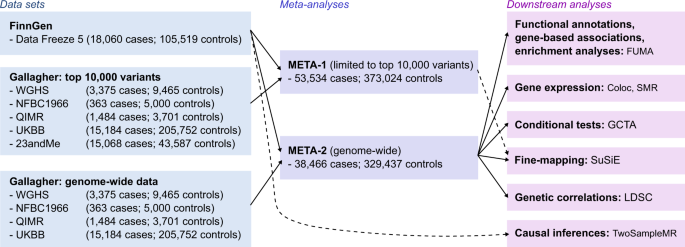
• Finnish researchers conducted a GWAS of UL in up to 426,558 European women. They elucidated 22 novel UL loci, as well as 50 known UL loci.
• “UL-associated loci harbour genes enriched for development, growth, and cellular senescence. Of particular interest are the smooth muscle cell differentiation and proliferation-regulating genes functioning on the myocardin-cyclin dependent kinase inhibitor 1 A pathway,” wrote the authors.
• A main finding of the current study is the association of 17p12 harboring myocardin; myocardin is a transcription factor that is expressed in smooth muscle tissues, including the colon and arteries, as well as the uterus.
• “The expression of myocardin has been shown to be downregulated in UL tissue compared with normal myometrium. Also, it has been proposed that the loss of myocardin function may be a key factor in driving SMC proliferation in UL; however, prior to our findings, only one study has reported GWAS association implicating myocardin,” the authors wrote.
• Because UL is estrogen dependent, the estrogen-rich environment could trigger excess growth of smooth muscle cells during to sexual maturity, thus leading to UL in women who are genetically predisposed to muscle building.
• One limitation of the current study is a paucity of relevant tissue samples for genetic analysis. Additionally, this study included only computational—and not functional—analysis.