



Conservative endovascular management for intractable delayed hemorrhage after laparoscopic-assisted vaginal hysterectomy: Two case reports
Source : https://www.sciencedirect.com/science/article/pii/S2214911223000012
Hysterectomy is a common gynecological surgical procedure. * Delayed hemorrhage after hysterectomy is an infrequent complication. * Endovascular management is a feasible option for intractable delayed hemorrhage. Delayed hemorrhage from...
Discussion: When initial primary management, including vaginal packing with or without vault suturing, fails, the management of delayed hemorrhage becomes challenging and involves various approaches to identify and locate the precise cause and site of hemorrhage. The two case reports describe successful use of TAE following three-dimensional...
Inherited mutations affecting the SRCAP complex are central in moderate-penetrance predisposition to uterine leiomyomas
Source : https://www.cell.com/ajhg/fulltext/S0002-9297(23)00009-5
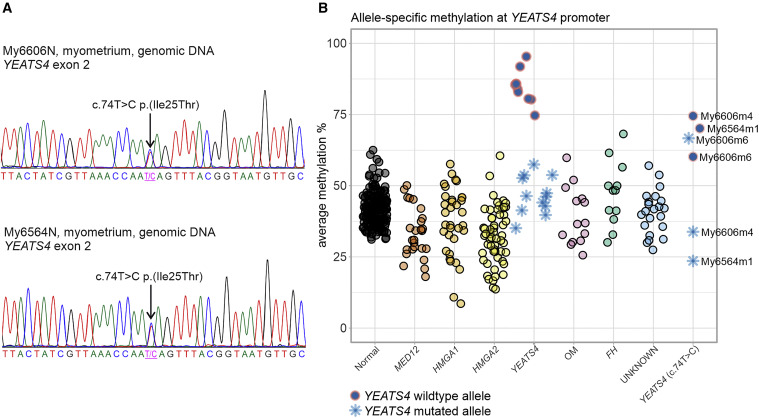
UK Biobank whole-exome data revealed an association between mutations in genes encoding the SRCAP complex and uterine leiomyomas (ULs). In our collection of 860 individuals, we identified seven women with...
Conclusion: n our analysis of 19,270 individuals with ULs and 214,344 female controls, LoF of YEATS4 and ZNHIT1, which are genes encoding SRCAP complex subunits, ranked as the two strongest UL associations overall, followed closely by DMAP1 and ACTL6A associations. Similarly striking is that LoF of genes encoding SRCAP complex subunits was...
Uterine Fibroids Operated in the Obstetric Gynecology Department of the Mother-Child Department at the University Hospital of Tengandogo: About 109 Cases
Source : https://www.scirp.org/journal/paperinformation.aspx?paperid=123076
Background: Uterine fibroid is the most common benign gynecological tumor in women of childbearing age and is common in our context. It can be discovered incidentally or by metrorrhagia. Objective:...
Conclusion: Uterine fibroid is a common pathology in gynecological surgical practice. The most frequent reasons for consultation are uterine haemorrhages, pelvic pain and subfertility. Raising patient awareness for early detection, universal health insurance and subsidizing costs could improve its care.
Clinical outcome analysis of intramural myoma greater than 8 cm in diameter removed during caesarean section: a retrospective study - BMC Women's Health
Source : https://bmcwomenshealth.biomedcentral.com/articles/10.1186/s12905-023-02210-9
Objective To explore the safety and efficiency of endometrial myomectomy (EM) and Serosal myomectomy (SM) for the removal of intramural myoma greater than 8 cm in diameter during cesarean section....
Conclusion: It is safe and feasible to remove interstitial myomas larger than 8 cm in diameter during caesarean section. EM has the advantage of shorter operation time and less intraoperative bleeding, SM, in a way that the myoma is removed before suturing the uterine incision, can shorten the myomectomy time. It can benefit the patients more.

The burden of Chronic Pelvic Pain (CPP): Costs and quality of life of women and men with CPP treated in outpatient referral centers
Source : https://www.ncbi.nlm.nih.gov/pmc/articles/PMC9910684/
Chronic Pelvic Pain (CPP) is a complex, multifaceted condition that affects both women and men. There is limited literature on the cost utilization the healthcare system and CPP patients incur....
Conclusion: Chronic Pelvic Pain was found to have a large cost burden of $29,951 for in-network services which includes treatments, diagnostics, and surgeries.