


Discussion: We are convinced that the complex pathogenesis of uterine myoma suggests numerous molecular targets for open up new treatment options of these benign tumours and improving its management and that controlled research with involving specialists from different fields is needed to continue the study of UFs etiopathogenesis.

Gonadotropin-Releasing Hormone agonist (GnRH-a) Pretreatment before Hormone Replacement Therapy Does Not Improve Reproductive Outcomes of Frozen-Thawed Embryo Transfer Cycle in Older Patients with Intrauterine Fibroid: A Retrospective Cohort Study
Source : https://www.mdpi.com/2077-0383/12/4/1401
Background: Surgery in elder patients with intermural fibroids delays pregnancy, and GnRH-a can shrink uterine fibroids to a certain extent; therefore, for geriatric patients with fibroids, determining whether GnRH-a pretreatment...
Conclusion: In conclusion, our research suggests that GnRH-a pretreatment before HRT cannot reduce the size of intramural fibroids through down-regulation in order to improve reproductive outcomes. Compared with the NC cycles and HRT cycles, no better reproductive outcomes were observed in the GnRH-a–HRT group. However, the GnRH-a–HRT...

Adverse events and complications after magnetic resonance-guided focused ultrasound (MRgFUS) therapy in uterine fibroids - a systematic review and future perspectives - PubMed
Source : https://pubmed.ncbi.nlm.nih.gov/36775655/
MRgFUS seems to be safe in UF therapy. The occurrence of AEs, especially major ones, is relatively low in comparison with other methods. The new devices and more experience of...
Conclusion: MRgFUS seems to be safe in UF therapy. The occurrence of AEs, especially major ones, is relatively low in comparison with other methods. The new devices and more experience of their users seem to reduce AE rate. The lack of unification in AE reporting and missing data are the main issues in this area.
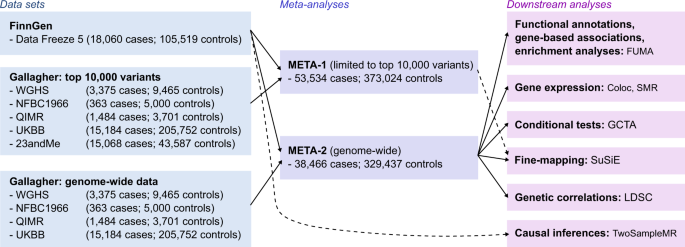
Evidence of a causal effect of genetic tendency to gain muscle mass on uterine leiomyomata - Nature Communications
Source : https://www.nature.com/articles/s41467-023-35974-7
Many genetic factors that contribute to uterine leiomyomata (UL) - the most common tumours of the female genital tract - remain to be discovered. Here, the authors conduct a UL...
Discussion: The numerous UL risk loci identified in the present study provide valuable insights into the architecture of heritable genetic risk factors in UL. Multiple aspects of our study, including the results of gene-based enrichment analyses and LDSC regression-derived genetic correlations, indicate altered muscle tissue biology in UL. Most...
-
Uterine Fibroids3yrKey Points • Source: Nature Communications • Conclusions/Relevance: “Our results further suggest that genetic predisposition to increased fat-free mass may be causally related to higher UL [uterine leiomyomata] risk, underscoring the involvement of altered Show More
Conclusion: RSSH offers a novel approach to the surgical management of a gynecologic disease. While research comparing RSSH and RMPH is limited, our systematic review and meta-analysis reveals similar conversion rates, blood loss, operating times, and length of hospital stay between these two groups.